Last-Mile Delivery Fleet Management Software for Small 3PLs
Most last-mile software targets either large e-commerce brands running their own fleet or enterprise logistics networks — leaving a real gap for small third-party logistics providers (3PLs) and independent couriers managing deliveries for multiple clients with a modest fleet. Here's what small 3PLs specifically need that larger-fleet platforms often over-build for.
Key takeaways
- The gap: Small 3PLs combine multi-client complexity with small-fleet scale most platforms ignore.
- First-class clients: Look for software that treats "client" as a core concept, not a workaround.
- Right-sized pricing: Avoid enterprise per-seat or high-volume tiers built for much larger networks.
- Onboarding speed: Fast client onboarding directly limits how quickly you can grow.
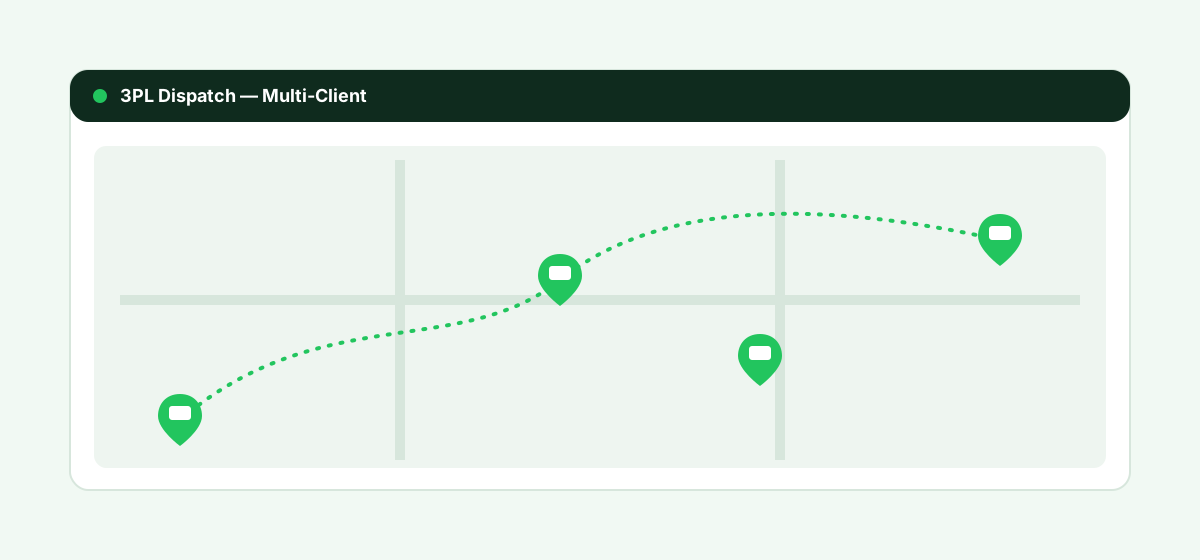
Why Small 3PL Needs Differ From Single-Brand Delivery Fleets
A large retailer's delivery fleet serves one brand, one set of delivery rules, and one customer experience. A small 3PL serving multiple clients needs to manage different delivery requirements, branding, and reporting per client — while running a much smaller fleet than the enterprise platforms these features are often built around. That combination (multi-client complexity, small-fleet scale) is a specific gap between "single-brand delivery software" and "enterprise logistics network platforms."
What to Prioritize as a Small 3PL
- Multi-client account management, with the ability to segment routes, reporting, and branding by client rather than treating all deliveries as one undifferentiated fleet.
- Client-specific delivery rules, since different clients may have different delivery-window commitments, proof-of-delivery requirements, or branding for customer-facing tracking.
- Pricing that scales with a small fleet, rather than enterprise per-seat or high-volume tiers built for much larger networks.
- Fast onboarding for new clients, since adding a client shouldn't require a lengthy software reconfiguration each time.
- White-label or client-branded tracking, if your value proposition includes a branded delivery experience rather than a generic tracking page.
- Straightforward driver management for a smaller team, without enterprise-scale workforce complexity you don't need.
- Client-facing reporting and invoicing support, since billing multiple clients accurately for delivery volume is a core 3PL need.
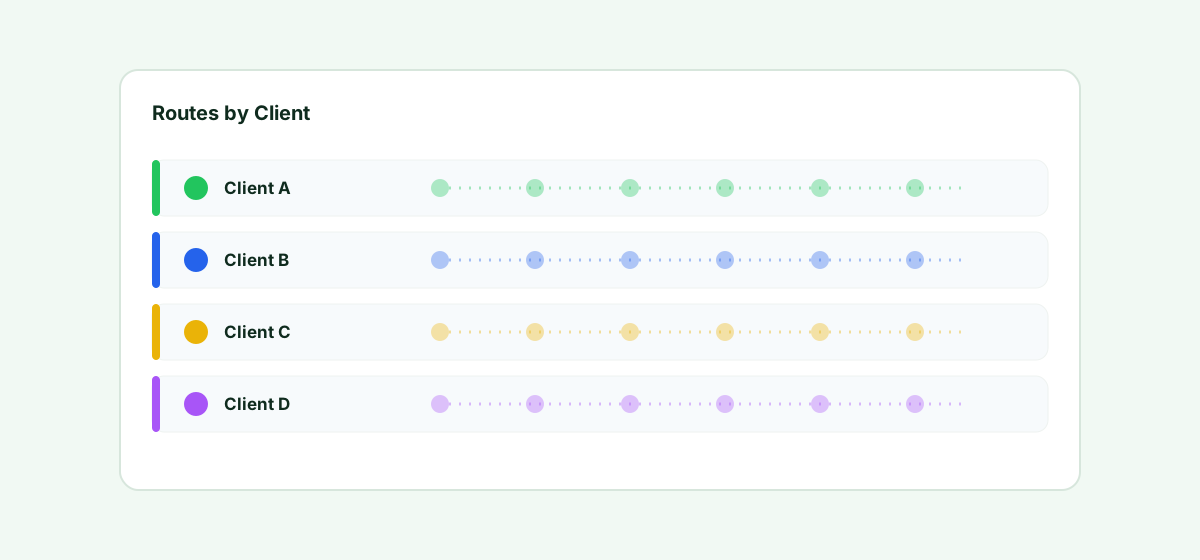
Running deliveries for multiple clients?
See how Fleet segments routes, branding and reporting by client on a right-sized plan.
Start a Free TrialMulti-Client Complexity: The Core Differentiator
The single biggest difference between software built for a single-brand delivery fleet and software that actually fits a small 3PL is whether the platform treats "client" as a first-class concept — separate branding, delivery rules, reporting, and billing — rather than assuming every delivery belongs to the same business. Platforms built primarily for single-brand use can often approximate multi-client functionality with workarounds, but a platform designed for 3PL use from the start tends to handle this more cleanly. Pair it with strong route optimization and last-mile delivery features and you have the core of a small-3PL stack.
Frequently asked questions
What makes last-mile delivery software different for a 3PL versus a single retailer?
The core difference is multi-client management — a 3PL needs to segment routes, branding, delivery rules, and billing by client, which single-brand delivery platforms aren't necessarily built to handle well.
Is enterprise logistics software overkill for a small 3PL?
Often yes — enterprise platforms are typically built and priced for much larger delivery networks, which can mean paying for unused capacity and a longer implementation than a small 3PL's fleet size justifies.
Can small 3PLs offer client-branded delivery tracking?
Some last-mile platforms support white-label or client-branded tracking pages and notifications — confirm this specifically if a branded delivery experience is part of your value proposition to clients.
How important is fast client onboarding in choosing 3PL delivery software?
Very — if adding a new client requires a lengthy reconfiguration each time, that friction directly limits how quickly a small 3PL can grow its client base.
Bottom Line
If you run a small 3PL or independent courier business, look specifically for software that treats multi-client management as a core feature, not a workaround — and be wary of enterprise platforms priced and built for delivery networks far larger than yours.
See Fleet for multi-client delivery
Book a demo and see per-client routes, branding and billing on a small-fleet plan.
Start a Free TrialRelated last-mile delivery resources
Last-mile delivery software
Routing, tracking and proof of delivery for the final mile.
Route optimization
Plan efficient multi-stop routes across clients.
Driver & delivery app
Mobile app for drivers: stops, POD and status.
TMS software compared
How last-mile and TMS platforms stack up.