Engine-Hours Maintenance Tracking: Why It's the Right Model for Heavy Equipment
Heavy equipment manufacturers publish service intervals in engine hours — not miles — because the wear that matters most (oil breakdown, filter loading, hydraulic degradation) tracks with how long an engine runs, not how far a machine travels. An excavator running 10 hours a day 200 feet from where it parks accumulates real wear at near-zero mileage. Here's how engine-hours maintenance tracking works and what to look for.
Key takeaways
- Hours, not miles: Engine hours are the only reliable wear proxy for machines that barely travel.
- Automate capture: Telematics-fed hour readings prevent the missed/late service that manual logging causes.
- Brand-specific intervals: Use manufacturer templates, not one universal number.
- Add calendar triggers: Belts, coolant and some seals are time-based regardless of hours.
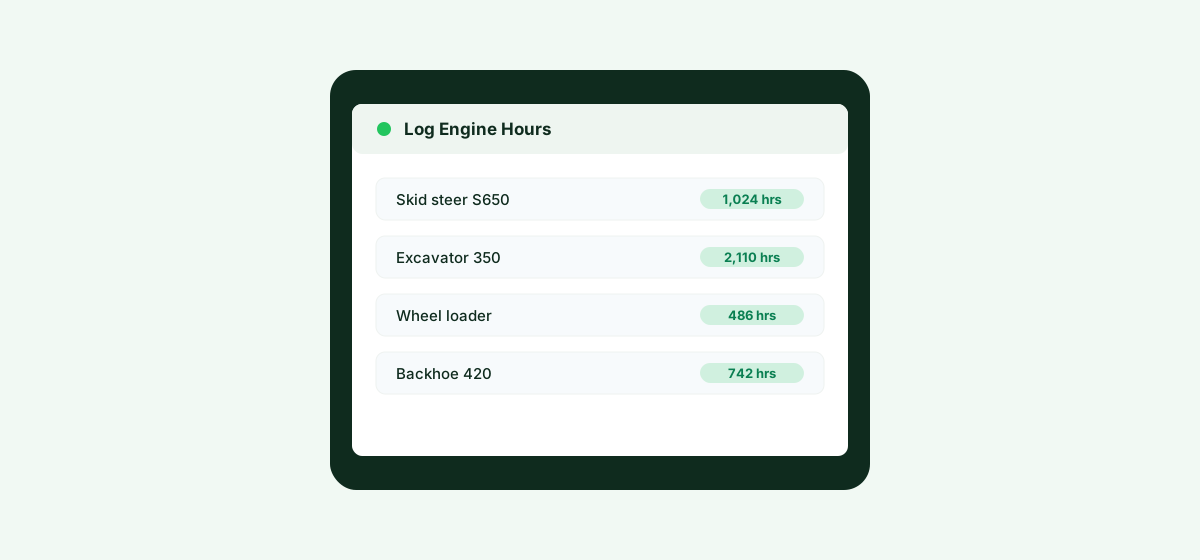
Why Mileage Doesn't Work for Heavy Equipment
Mileage-based scheduling assumes a rough correlation between distance traveled and engine wear — reasonably true for an on-road vehicle, not true at all for equipment that spends most of its operating life stationary or moving within a tight job-site radius. A skid steer or excavator's engine runs continuously during operation regardless of how far the machine physically travels, meaning engine hours are the only reliable proxy for wear-based maintenance timing.
How Engine-Hours Maintenance Scheduling Works
Most heavy equipment has a built-in hour meter, and increasingly, factory telematics that report engine hours automatically to a connected platform. Software using engine-hours scheduling sets service triggers — oil changes typically every 250–500 hours, more extensive service at 1,000-hour and 2,000-hour intervals, for example — based on manufacturer-recommended intervals for each specific machine and model, and flags equipment as due once it crosses the threshold.
What to Look For in Engine-Hours Tracking Software
- Automatic hour-meter data capture via telematics, where available, rather than relying entirely on manual entry — manual logging is a common source of missed or late maintenance.
- Manufacturer-specific interval templates, since recommended intervals vary by brand and model, not a single universal number.
- Alerts before the threshold is reached, not just after, so maintenance can be scheduled around job-site downtime rather than reactively.
- Historical hours-vs-maintenance reporting, to spot patterns like equipment consistently running past its service interval before maintenance happens.
- Support for both engine-hours and calendar-based triggers, since some items (belts, coolant, certain seals) are time-based regardless of usage hours.
- Fleet-wide hours reporting, to help with utilization decisions — heavily used equipment nearing end-of-life hours may be a better sell/replace candidate than a lightly used comparable machine.
| Service type | Typical engine-hours interval | Trigger model |
|---|---|---|
| Basic service (oil, filters) | 250–500 hours | Engine hours |
| Intermediate service | 1,000 hours | Engine hours |
| Major service | 2,000 hours | Engine hours |
| Belts, coolant, seals | By date | Calendar / time-based |
Scheduling service by the hour, not the mile?
Fleet captures hour-meter readings and applies manufacturer intervals across your equipment.
Start a Free TrialManual Hour Meters vs. Telematics-Connected Tracking
Older or smaller equipment often relies on a physical hour meter that must be checked and logged manually — workable for a small fleet, but error-prone and easy to fall behind on at scale. Telematics-connected equipment reports engine hours automatically to a maintenance platform, removing the manual step and making automated alerts practical. If your fleet mixes older, non-telematics machines with newer connected equipment, look for software that supports both manual entry and automated data feeds in the same system.
Frequently asked questions
Why do heavy equipment manufacturers use engine hours instead of mileage for service intervals?
Because engine wear correlates with how long an engine runs, not distance traveled — heavy equipment often operates with minimal travel distance but significant engine runtime, making mileage an unreliable maintenance trigger.
Can engine-hours tracking be automated?
Yes, for equipment with factory telematics that report engine hours to a connected platform automatically. Older or non-telematics equipment typically requires manual hour-meter logging.
How often should heavy equipment be serviced based on engine hours?
It varies by manufacturer and equipment type — common intervals range from every 250–500 hours for basic service up to 1,000–2,000-hour intervals for more extensive maintenance. Always follow manufacturer-specific recommendations rather than a generic interval.
What happens if equipment maintenance is scheduled by mileage instead of engine hours?
Equipment risks running well past its actual wear-based service need, since low mileage can mask significant engine runtime — this is a common cause of preventable major repairs in heavy equipment fleets.
Bottom Line
If your fleet includes heavy equipment, engine-hours-based scheduling isn't optional — it's the maintenance model manufacturers actually design around. Look for software that automates hour-meter data capture where possible and applies manufacturer-specific intervals rather than a one-size-fits-all schedule.
See engine-hours scheduling in Fleet
Book a demo and schedule maintenance by hours across your whole equipment fleet.
Start a Free TrialRelated construction fleet resources
Heavy equipment maintenance software
What to look for beyond on-road fleet tools.
Fleet maintenance software
Preventive maintenance scheduling and work orders.
Fleet software + Procore
Push equipment hours and cost into Procore.
Construction fleet management
Fleet for contractors and construction operations.