Municipal Fleet Management Software RFP: What to Include (2026 Template Guide)
Municipal and county fleet software purchases almost always go through a formal RFP process, and the software side is where procurement teams struggle — generic RFP templates aren't built for fleet-specific requirements like preventive maintenance scheduling, fuel management, motor pool reservations, and compliance reporting across mixed vehicle types. Here's what a fleet-specific municipal RFP actually needs to cover.
Key takeaways
- Generic templates fail: Standard software RFPs miss fuel-card, mixed-fleet, and maintenance-logic sections.
- Describe workflows, not checklists: Feature checklists produce vendor responses you can't compare.
- Specify the mixed fleet up front: Police, fire, public works and heavy equipment have different needs.
- Nail data ownership & exit: Frequently omitted, and it bites at contract renewal.
Why Generic RFP Templates Fall Short for Fleet Software
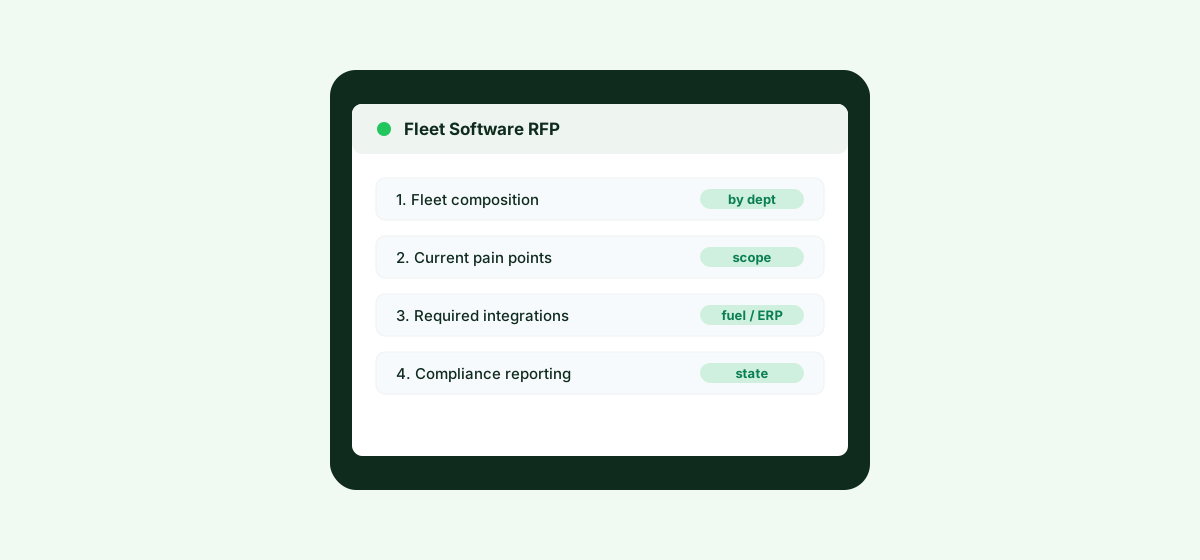
Most procurement departments have a standard RFP template for software generally, covering vendor qualifications, pricing structure, and implementation timeline. Fleet management software has additional requirements a generic template usually misses: integration with existing fuel card systems, support for mixed fleets (police, fire, public works, motor pool), preventive maintenance scheduling logic, and reporting formats that match state or federal compliance requirements. Skipping these sections is the most common reason municipal fleet software RFPs get weak, hard-to-compare vendor responses.
Core Sections a Municipal Fleet Software RFP Should Include
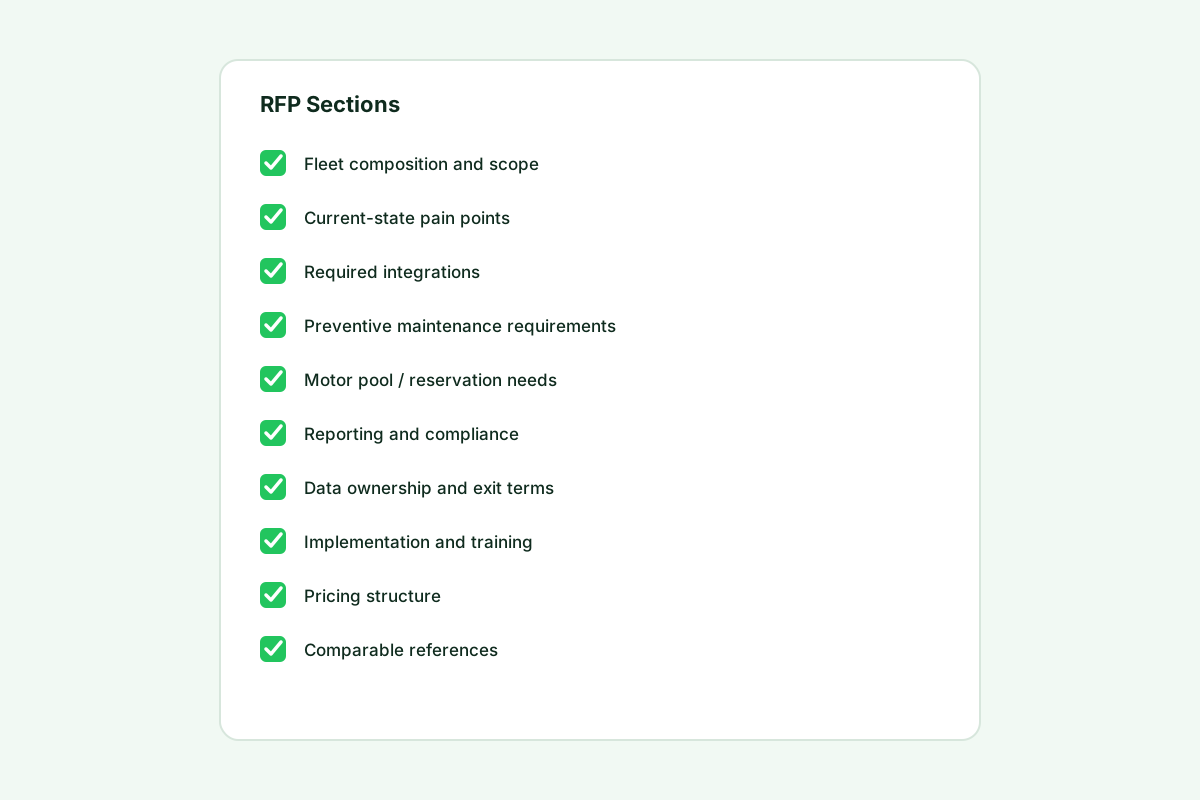
- Fleet composition and scope. Total vehicle count by department (police, fire, public works, parks, motor pool), vehicle types, and whether the software must cover light-duty vehicles, heavy equipment, or both.
- Current-state pain points. What's failing now (spreadsheet-based maintenance, no centralized fuel data, manual motor pool scheduling) — so vendors respond to your actual problem, not a generic checklist.
- Required integrations. Fuel card systems, existing GPS/telematics hardware, your financial/ERP system, and any state DOT or emissions-reporting systems.
- Preventive maintenance requirements. How scheduling should work (mileage-based, engine-hours-based, or calendar-based) across a mixed fleet.
- Motor pool / vehicle reservation functionality, if applicable — many municipalities need shared-vehicle booking on top of dedicated-department vehicle tracking.
- Reporting and compliance requirements. State-specific reporting, public-records/transparency requirements, and grant-funding reporting tied to vehicle usage.
- Data ownership and exit terms. What happens to your fleet data if you switch vendors later — frequently missing from public-sector RFPs and a problem at renewal.
- Implementation and training plan, including timeline and responsibility for data migration.
- Pricing structure, including per-vehicle, per-user, or flat-rate, and how pricing scales as the fleet grows.
- References from comparable municipalities — ideally cities or counties of similar fleet size and department mix.
Building a fleet software RFP?
Use these sections as your starting template — then book a demo to see how Fleet answers each one.
Start a Free TrialCommon Mistakes That Slow Down Municipal Fleet Software Procurement
- Writing feature checklists instead of describing actual workflows, which makes vendor responses hard to compare apples-to-apples.
- Not specifying mixed-fleet requirements up front, leading to responses that only address light-duty vehicles and miss heavy equipment or specialty vehicles.
- Leaving out data migration scope, which becomes a costly surprise during implementation.
- Skipping a reference-check requirement for comparable agencies, which lets vendors point to unrelated private-sector references.
Frequently asked questions
What should a municipal fleet management RFP include that a general software RFP doesn't?
Fleet-specific sections covering vehicle composition by department, preventive maintenance logic, fuel card integration, motor pool/reservation needs, and compliance reporting requirements specific to public-sector fleets.
How long does municipal fleet software procurement typically take?
It varies significantly by jurisdiction and procurement rules, but formal government RFP processes — from issuance through vendor selection and contract execution — commonly run several months, longer than typical private-sector software purchases.
Should motor pool management be part of the same RFP as fleet maintenance software?
It depends on whether your municipality needs both. Some agencies run motor pool reservation and fleet maintenance as one integrated system; others keep them separate. Decide this before drafting the RFP so vendor scope is clear.
What's a common mistake in evaluating fleet software vendor responses?
Scoring responses purely on price or a generic feature checklist rather than requiring answers tied to your specific fleet composition and current-state pain points, which makes weaker vendors look comparable to stronger ones on paper.
Bottom Line
A fleet-specific RFP — not a generic software procurement template — is what gets you vendor responses you can actually compare. Build the fleet composition, integration, and compliance sections in from the start rather than adding them as follow-up questions after proposals come in.
See how Fleet answers your RFP
Book a demo and walk through each RFP section against Fleet's platform with your fleet's real requirements.
Start a Free TrialRelated government fleet resources
Motor pool management software
Shared-vehicle reservations and utilization.
Public works fleet software
Managing mixed municipal equipment.
Police fleet maintenance software
Upfit tracking and patrol-duty maintenance.
Government & municipal fleets
Fleet for cities, counties and agencies.