Public Works Fleet Management Software: Handling the Mixed-Equipment Problem
Public works departments run some of the most mixed fleets in local government — dump trucks, plow-equipped vehicles, mowers, street sweepers, and light-duty pickups, often with seasonal attachment swaps on the same base vehicle. Fleet software built primarily around light-duty vehicle tracking tends to struggle with this mix. Here's what to look for instead.
Key takeaways
- The vehicle isn't fixed: One chassis runs a plow in winter and a mower deck in summer.
- Track attachments separately: Plows, decks and dump bodies need their own maintenance and history.
- Add engine hours: Low-speed attachment work wears engines faster than mileage shows.
- Snow ops need event logging: Plow routes, response times and salt/brine usage for budget and liability.
The Mixed-Equipment Challenge
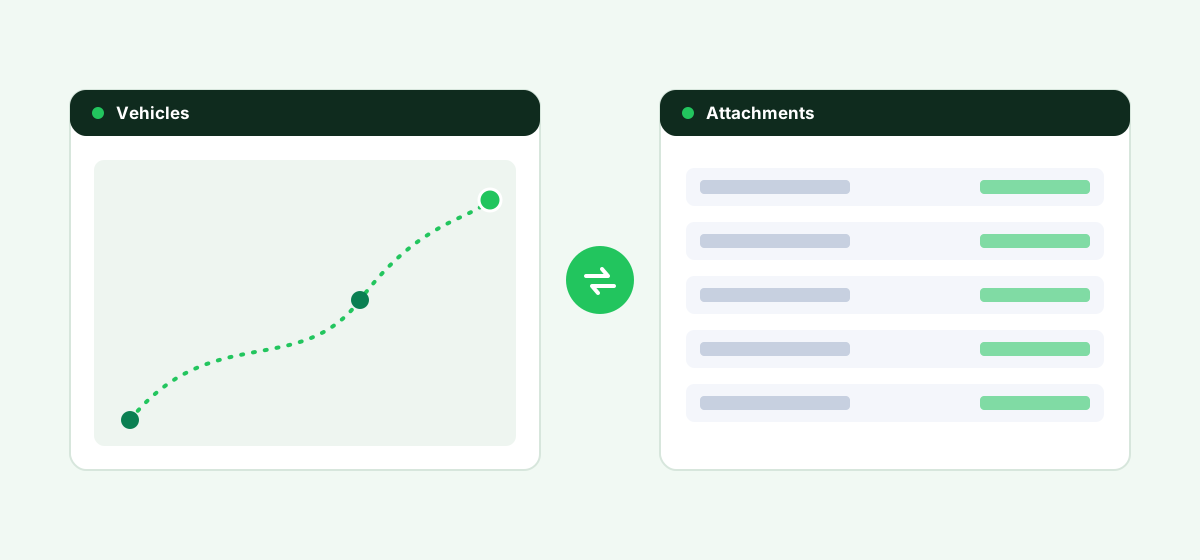
A single public works truck might run a snow plow attachment in winter and a mower deck or dump body in summer — meaning the "vehicle" in your fleet system isn't a fixed configuration. Maintenance needs, usage patterns, and even licensing/classification can change seasonally on the same chassis. Software built around a static vehicle profile (one vehicle, one configuration, one maintenance schedule) often can't represent this well, sending departments back to spreadsheets for anything involving attachments.
What to Look For in Public Works Fleet Software
- Attachment and equipment tracking separate from the base vehicle, so a plow, mower deck, or dump body can be tracked, maintained, and scheduled independently of which chassis it's currently on.
- Seasonal maintenance scheduling. Maintenance triggers tied to seasonal use patterns (pre-winter plow inspection, post-winter chassis rust/corrosion check) rather than only mileage or calendar intervals.
- Heavy-equipment and engine-hours tracking, alongside standard mileage, for vehicles running attachments at low road speed.
- Route and service-area tracking, useful for snow removal routes, street sweeping schedules, or mowing rotations.
- Weather-event reporting, particularly for snow and ice operations, where departments document plow routes, salt/brine usage, and response times for budget and liability.
- Multi-department cost allocation, if public works vehicles are shared with or billed to other departments.
- Compatibility with GIS/routing tools many public works departments already use for street and infrastructure mapping.
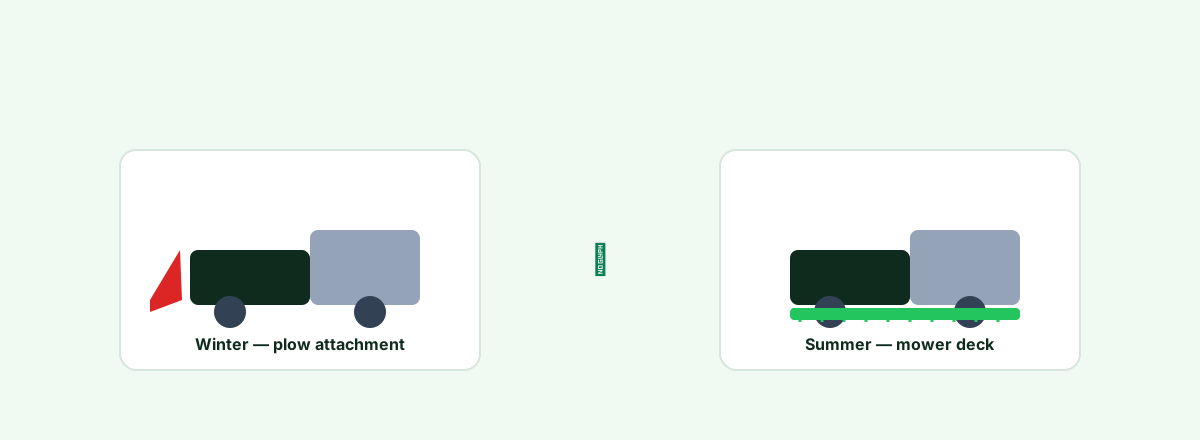
Swapping plows, decks and dump bodies seasonally?
Fleet tracks attachments separately from the chassis, with seasonal and engine-hours maintenance triggers.
Start a Free TrialSnow and Ice Operations: A Specific Sub-Need
Departments in snow-affected regions often have reporting requirements around plow routes, response times, and material usage (salt, brine, sand) that general fleet software doesn't handle out of the box. If winter operations are a significant part of your public works fleet's workload, ask specifically whether a platform supports route/event logging tied to weather events, not just standard maintenance and mileage tracking.
Frequently asked questions
How is public works fleet software different from general municipal fleet software?
The main difference is support for mixed and interchangeable equipment — attachments like plows and mower decks swapped seasonally on the same chassis — which general fleet software built around static vehicle profiles often handles poorly.
Does public works fleet software need to track equipment separately from vehicles?
For departments using seasonal attachments (plows, mowers, dump bodies), yes — tracking maintenance and usage on the attachment itself, independent of which vehicle it's currently mounted on, gives a more accurate maintenance and cost picture.
Can public works fleet software help with snow and ice operation reporting?
Some platforms support route and weather-event logging useful for documenting plow routes, response times, and material usage — this isn't universal, so confirm it specifically if winter operations are a major part of your fleet's workload.
Do public works departments need engine-hours tracking in addition to mileage?
Often yes — vehicles running attachments like mowers or plows at low road speed accumulate significant engine wear relative to mileage, so engine-hours tracking gives a more accurate maintenance trigger than mileage alone.
Bottom Line
If your public works fleet involves seasonal attachments or heavy equipment alongside standard vehicles, prioritize software that tracks equipment independently from the base vehicle — that flexibility is what separates public-works-appropriate fleet software from a generic light-duty vehicle tracker.
See Fleet for public works
Book a demo and see attachment tracking, seasonal scheduling and snow-ops reporting in one platform.
Start a Free TrialRelated fleet resources
Government & municipal fleets
Fleet for cities, counties and agencies.
Engine-hours maintenance tracking
Why hours beat mileage for attachment work.
Heavy equipment maintenance software
Managing dozers, loaders and heavy machines.
Municipal fleet software RFP template
Build a fleet-specific city procurement RFP.