Rental Equipment Fleet Tracking Software: What to Look For (2026)
Equipment rental companies have a fleet tracking problem genuinely different from a business that owns and operates its own equipment: the same machine moves between customers, needs condition documentation at every handoff, and is evaluated on rental utilization and revenue per unit — not just maintenance cost. Here's what rental-specific fleet tracking software needs to handle.
Key takeaways
- Utilization is the metric: Percent of fleet time actually rented drives buy/retire/reallocate decisions.
- Contracts + customers: Track who has each unit, since when, and when it's due back.
- Document condition: Photo capture at checkout and return reduces damage disputes.
- Geofence rentals: GPS/geofencing supports theft prevention and job-site boundary checks.

How Rental Equipment Tracking Differs From Owned-Fleet Tracking
A contractor tracking owned equipment cares primarily about maintenance cost, job-site allocation, and total cost of ownership. A rental company tracking the same category of equipment cares about all of that, plus which customer currently has each unit, contract terms and return dates, utilization rate (how much of the fleet's available time actually generates rental revenue), and documented condition at checkout and return to manage damage disputes. General fleet maintenance software built for owned fleets often has no concept of a rental contract or a customer-facing checkout/return workflow.
What to Look For in Rental Equipment Fleet Tracking Software
- Rental contract and customer tracking, tied directly to each piece of equipment — who has it, since when, and when it's due back.
- Condition documentation at checkout and return, ideally with photo capture, to reduce disputes over damage responsibility.
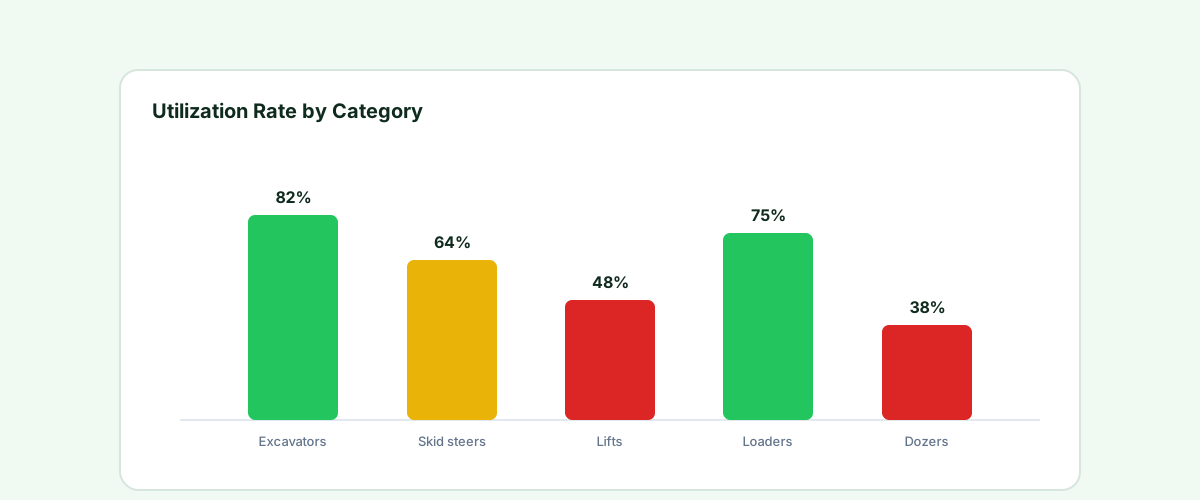
- Utilization rate reporting. The core rental metric: what percentage of available fleet time is actually rented out, by equipment category and individual unit — critical for fleet sizing and purchasing.
- Maintenance scheduling that accounts for rental use intensity, since rental equipment often sees harder, more variable use across different operators than an owned fleet.
- GPS/geofencing for rented equipment, both for theft prevention and to confirm equipment stays within agreed job-site boundaries during a rental.
- Integration with rental/point-of-sale and billing systems, so equipment status and billing stay in sync without manual reconciliation.
- Damage billing workflows, connecting return-condition documentation directly to a billing or claims process.
Renting equipment out, not just running it?
Fleet adds contract tracking, condition documentation and utilization reporting on top of maintenance.
Start a Free TrialUtilization Rate: The Metric That Drives Rental Fleet Decisions
For a rental company, utilization rate — the percentage of time equipment is actually generating rental revenue versus sitting idle in the yard — is usually the single most important fleet metric, more so than maintenance cost alone. Software that tracks utilization by equipment category and individual unit gives rental businesses the data to decide which equipment to add, retire, or reallocate between locations.
Frequently asked questions
Is rental equipment tracking software different from general fleet maintenance software?
Yes — rental tracking needs to handle customer/contract assignment, return-condition documentation, and utilization-rate reporting, none of which are core features of fleet software built for owned, non-rental equipment.
What is utilization rate in equipment rental, and why does it matter?
Utilization rate is the percentage of time a piece of equipment is actively rented versus sitting idle. It's a key metric because it directly drives decisions about fleet size, pricing, and which equipment categories to expand or reduce.
Does rental equipment software need GPS tracking?
Many rental businesses use GPS/geofencing on rented equipment for theft prevention and to confirm equipment stays within the agreed job-site area during the rental period — it's a common but not universal feature.
How does condition documentation work in rental equipment software?
Typically through photo capture and a structured checklist at both checkout and return, creating a documented record that can be referenced if a damage dispute arises after the rental period ends.
Bottom Line
If your business rents equipment out rather than only operating owned equipment, look specifically for software with contract tracking, condition documentation, and utilization reporting — features that separate rental-fleet software from general equipment maintenance tools built for owned fleets.
See Fleet for rental fleets
Book a demo and see contracts, condition capture and utilization reporting alongside maintenance.
Start a Free TrialRelated construction fleet resources
Heavy equipment maintenance software
What to look for beyond on-road fleet tools.
Engine-hours maintenance tracking
Why hours beat mileage for equipment.
Construction fleet management
Fleet for contractors and construction operations.
Fleet reports & analytics
Utilization and cost reporting across the fleet.