Fleet Management Software for Utility Companies
Utility fleets — electric, gas, water, and telecom — combine specialty vehicles (bucket trucks, digger derricks, vac trucks), strict compliance requirements, and a need to mobilize quickly during outages or emergencies. Generic fleet software built around standard light-duty vehicles often doesn't handle the specialty equipment maintenance or emergency-response coordination utility fleets actually need. Here's what to prioritize.
Key takeaways
- Specialty gear, special rules: Bucket trucks and derricks need aerial device testing on their own schedule.
- Storm mode is real: Outage response needs instant view of which crews/vehicles can mobilize and from where.
- Mutual aid visibility: Track your own fleet plus incoming aid resources during major storms.
- Works offline: Remote crews need offline-capable mobile access, not just urban connectivity.

What Makes Utility Fleets Different
A utility fleet isn't just larger or more specialized than a typical commercial fleet — it operates under different pressures. Equipment like bucket trucks and digger derricks have their own inspection and certification requirements (aerial device testing, for example) separate from standard vehicle maintenance. And during storms or outage events, fleet readiness becomes an emergency-response question: which vehicles and crews can mobilize immediately, and where are they relative to affected areas.
What to Look For in Utility Fleet Management Software
- Specialty vehicle and aerial device tracking. Bucket trucks and digger derricks require periodic aerial device testing and certification separate from standard vehicle maintenance — software should track these on their own schedule, not lump them into generic preventive maintenance.
- Emergency/storm response mode. Quickly view vehicle and crew availability and location during outage events, when normal dispatch patterns are disrupted and speed of mobilization matters most.
- Mutual aid fleet visibility, if your utility participates in mutual aid agreements during major storm events — tracking both your own fleet and incoming mutual aid resources.
- Compliance and certification tracking, covering vehicle-level requirements (DOT inspections, aerial device certification) and crew-level requirements (CDL, specialized operator certifications).
- Rugged, field-usable mobile access, since crews often work in remote areas with limited connectivity — offline-capable mobile access matters more here than for urban fleets.
- Integration with outage management systems, where relevant, to connect fleet/crew location with the broader outage response picture.
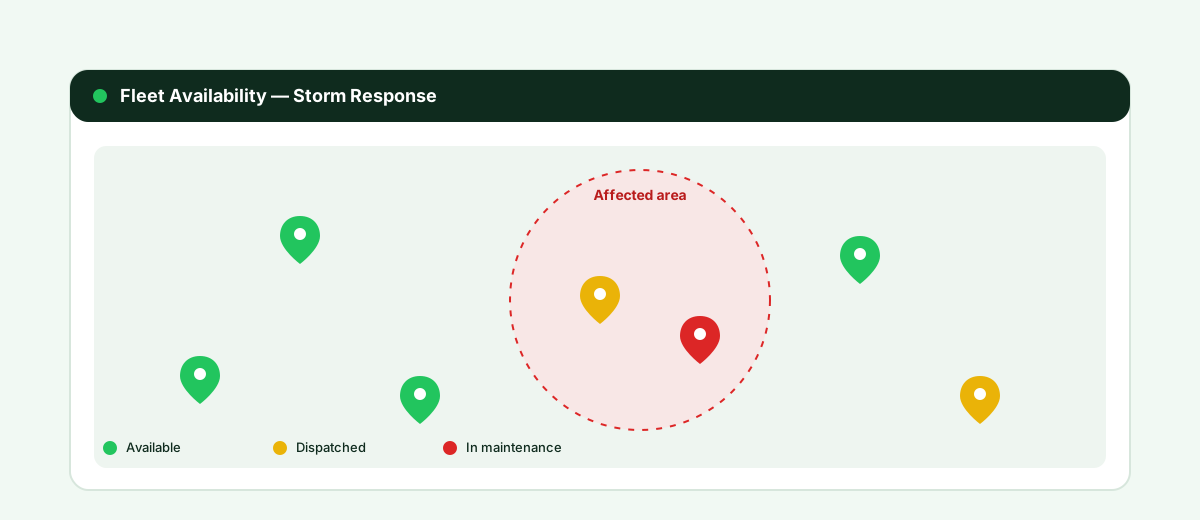
Managing bucket trucks and storm response?
Fleet tracks aerial-device certification and shows crew availability the moment an outage hits.
Start a Free TrialEmergency Response: The Feature Generic Fleet Software Misses
Most fleet management software is built around routine, predictable operations — scheduled maintenance, planned routes, normal dispatch. Utility fleets need that, but they also need to function under emergency conditions where normal patterns break down: a storm knocks out power across a wide area, and fleet management needs to answer "which crews and vehicles can respond right now, and from where" almost instantly. This is a genuinely different operational mode that not all fleet platforms support well.
Frequently asked questions
Do utility fleets need different maintenance tracking than standard commercial fleets?
Yes, at least for specialty vehicles — bucket trucks and digger derricks require periodic aerial device testing and certification that's separate from standard vehicle maintenance scheduling.
What is "storm mode" or emergency response mode in utility fleet software?
It refers to features that let dispatchers quickly see vehicle and crew availability and location during outage events, when speed of mobilization matters more than routine scheduling accuracy.
Does utility fleet software need to work offline?
Many utility crews work in remote or low-connectivity areas, so offline-capable mobile access is a more common requirement for utility fleets than for fleets operating primarily in well-connected service areas.
How does mutual aid affect utility fleet management software needs?
Utilities participating in mutual aid agreements during major storms may need visibility into both their own fleet and incoming mutual aid vehicles/crews — a capability not all fleet platforms support natively.
Bottom Line
If you manage a utility fleet, prioritize software that handles specialty vehicle certification requirements and can support emergency mobilization — not just routine maintenance scheduling built for standard commercial vehicles.
See Fleet for utility fleets
Book a demo and see aerial-device certification tracking and storm-response visibility in one platform.
Start a Free TrialRelated fleet resources
Public works fleet software
Managing mixed municipal equipment.
Engine-hours maintenance tracking
Why hours beat mileage for specialty vehicles.
GPS fleet tracking
Live location and crew visibility in the field.
Enterprise fleet management
Fleet at scale for large, complex operations.