Waste Management Fleet Software: Connecting Routing and Maintenance
Waste and recycling collection fleets have a routing problem (stop sequencing across residential and commercial routes) and a maintenance problem (collection vehicles are heavy, hard-running equipment with high-wear components like hydraulic compaction systems) that are more tightly linked than in most fleet operations — a truck breaking down mid-route directly disrupts that day's collection schedule.
Key takeaways
- Routing + maintenance are linked: A mid-route breakdown means missed stops residents notice immediately.
- Compaction is the wear point: Hydraulic lift/compaction systems cycle constantly — track cycles, not just miles.
- Collection routing is dense: Every-house sequencing differs from sparse point-to-point delivery.
- Split commercial vs. residential: Different vehicles, schedules and billing needs.

Why Routing and Maintenance Are More Connected Here Than in Most Fleets
In many fleet operations, a vehicle going down for maintenance is disruptive but manageable — deliveries or service calls can often be reassigned or delayed. In waste collection, a truck breaking down mid-route means missed collection stops that residents and municipalities notice immediately, and re-routing a replacement truck mid-day is far more disruptive than reassigning a single delivery. This makes reliable preventive maintenance — specifically avoiding unplanned breakdowns — a routing-continuity issue, not just a maintenance-cost issue.
What to Look For in Waste Fleet Software
- Route optimization built for collection patterns, which differ from typical delivery routing — collection routes involve dense stop sequences (every house on a street) rather than sparse point-to-point stops.
- Preventive maintenance scheduling for high-wear collection components, particularly hydraulic compaction and lifting systems, which see heavier use-cycle wear than a standard vehicle's mechanical systems.
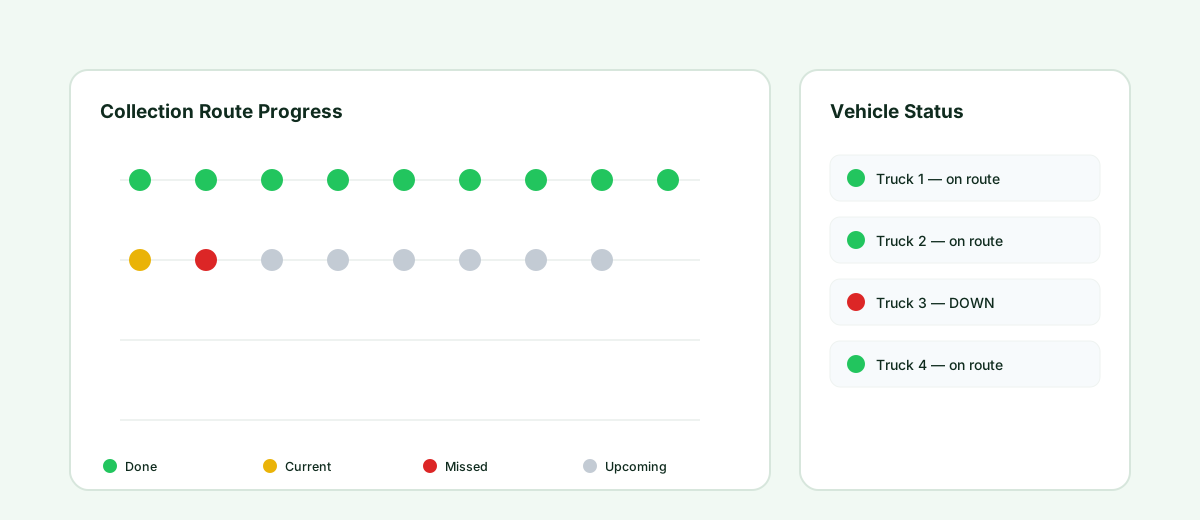
- Real-time vehicle status visibility tied to route progress, so dispatchers can see immediately if a truck goes down mid-route and needs replacement or reassignment.
- Commercial vs. residential route differentiation, since commercial (dumpster/container) and residential (curbside) collection often have different scheduling, vehicle type, and reporting needs.
- Weight and load tracking, useful for both operational and regulatory reporting in many jurisdictions.
- Integration with municipal or customer billing systems, if collection is billed per pickup or by weight/volume.
- Driver behavior monitoring for heavy-duty stop-start driving, since collection routes involve constant starting and stopping that affects fuel use and component wear differently than highway driving.
Keeping collection routes running?
Fleet ties route progress to vehicle status so a truck going down doesn't quietly become missed stops.
Start a Free TrialHydraulic and Compaction System Maintenance: A Specific Wear Point
Collection vehicles' hydraulic lifting and compaction systems cycle constantly throughout a route — far more use-cycles per day than most other vehicle systems experience — making them a common source of unplanned downtime if maintenance is scheduled purely on a mileage or calendar basis rather than accounting for cycle count or usage intensity. Fleet software that can track compaction-cycle counts or flag unusually heavy daily use patterns gives more accurate early warning than mileage-based scheduling alone.
Frequently asked questions
Why is preventive maintenance more critical for waste collection fleets than other fleets?
Because a mid-route breakdown directly disrupts that day's collection schedule for residents or commercial customers, in a way that's harder to work around than reassigning a single delivery or service call in other industries.
Does waste fleet routing software work the same as delivery route optimization?
Not exactly — collection routing involves dense, sequential stops (every address on a street) rather than sparse point-to-point delivery stops, so the optimization logic is built differently even though both are "route optimization" broadly.
What maintenance items are specific to waste collection vehicles?
Hydraulic compaction and lifting systems are a major wear point specific to collection vehicles, given how frequently they cycle throughout a route — more so than standard vehicle mechanical systems.
Should commercial and residential collection be tracked differently in fleet software?
Many operations benefit from differentiating the two, since commercial (dumpster/container) and residential (curbside) collection often have different vehicle types, scheduling patterns, and billing requirements.
Bottom Line
For waste and recycling fleets, look for software that treats routing and maintenance as connected problems — reliable preventive maintenance, especially for hydraulic and compaction systems, is what keeps collection routes running without the costly disruption of a mid-route breakdown.
See Fleet for waste fleets
Book a demo and see collection routing tied to preventive maintenance and live vehicle status.
Start a Free Trial