School Bus Fleet Software for Small Districts (20–50 Buses)
Most school bus software marketing is built around large districts running hundreds of buses with dedicated transportation departments. A district running 20 to 50 buses — often with one transportation director wearing several hats — has real but different needs: fast setup, straightforward day-to-day use, and pricing that fits a much smaller budget. This guide focuses specifically on that scale.
Key takeaways
- Scale changes the fit: Large-district software is often too complex and costly for 20–50 buses.
- Fast setup wins: Weeks-not-months implementation matters when one person runs transportation.
- Consolidate systems: Combined maintenance + compliance beats separate tools at small scale.
- Right-sized pricing: Look for per-bus or flat pricing, not hundreds-of-vehicle tiers.

Why Small-District Needs Are Different
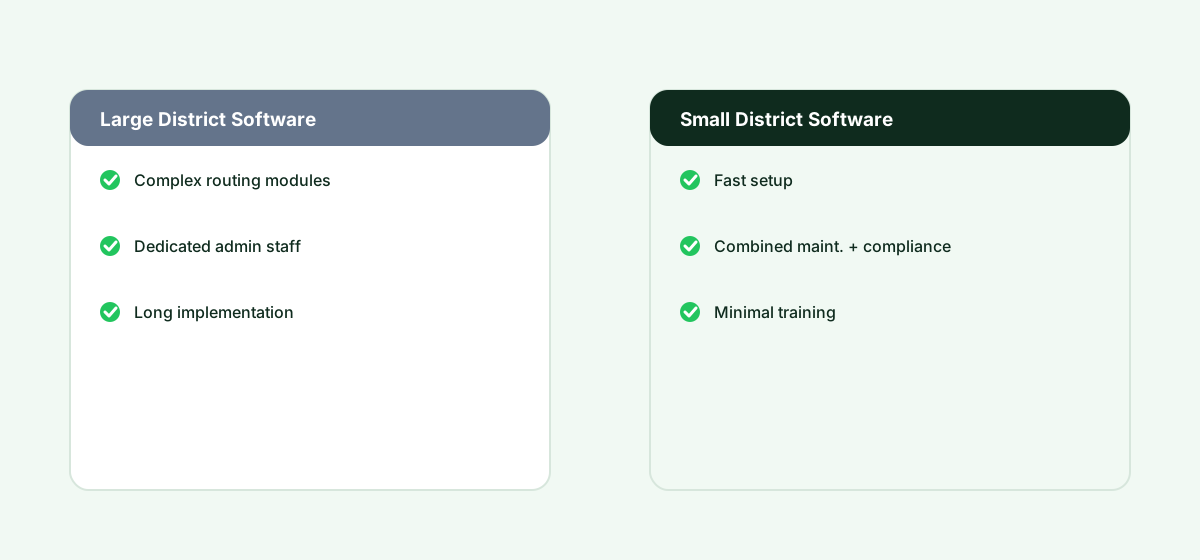
A large district's transportation department often includes dedicated routing staff, a maintenance shop team, and enough bus volume to justify complex, highly configurable software with a multi-month implementation. A small district managing 20–50 buses typically has one or two people responsible for maintenance scheduling, compliance documentation, and often routing as well — meaning software that takes months to configure or requires ongoing dedicated administration isn't a realistic fit, regardless of how capable it is on paper.
What to Prioritize at Small-District Scale
- Fast, low-complexity setup. Platforms designed to be running within weeks — a lengthy configuration project competes directly with limited staff time.
- Combined maintenance and compliance in one system, rather than separate tools for preventive maintenance, inspection/DVIR tracking, and driver qualification records.
- Pricing scaled to a small fleet, ideally per-bus or flat pricing that doesn't assume hundreds of vehicles.
- Minimal training burden. Software a transportation director or part-time office staff member can learn quickly.
- Straightforward state reporting, sized to what a small district actually needs to submit, without custom report-building expertise.
- Reliable vendor support with fast response times, since small districts rarely have in-house IT to troubleshoot independently.
Running a small district transportation office?
See how Fleet gets a 20–50 bus fleet running in weeks, with maintenance and compliance in one place.
Start a Free TrialDo Small Districts Need Routing Software Too?
Many small districts handle routing manually or with basic mapping tools rather than dedicated routing software, given the lower complexity of fewer routes and stops compared to a large district. Whether dedicated routing software is worth adding alongside maintenance/compliance software depends on route complexity — districts with more complex geography, special-needs transportation requirements, or frequent route changes tend to benefit more than districts with a small number of stable routes. If you do run both, see how routing and maintenance software connect.
Frequently asked questions
Is there fleet software specifically built for small school districts?
Most vendors serve a range of district sizes rather than marketing exclusively to small districts — the key is evaluating implementation timeline, pricing structure, and day-to-day complexity against your specific fleet size rather than assuming all vendors fit equally well.
Can a small district use the same software as a large district?
Sometimes, but confirm the pricing and implementation approach fit a smaller deployment — software built primarily around large-district workflows can be more complex and expensive than a small transportation office needs.
Do small districts need separate routing software?
Not always — many small districts manage routing manually or with basic mapping tools. Dedicated routing software becomes more valuable as route complexity, special-needs transportation, or frequent route changes increase.
What's the biggest mistake small districts make choosing bus fleet software?
Choosing a platform built and priced for much larger fleets, then either struggling with an implementation timeline sized for a big district or paying for capacity and features the small fleet doesn't use.
Bottom Line
If your district runs a small bus fleet, look specifically for software built to be fast to implement and simple to run day-to-day — not a scaled-down version of large-district transportation software. The right fit should reduce administrative burden immediately, not add to it.
See Fleet for small districts
Book a demo and see a right-sized maintenance and compliance system for a 20–50 bus fleet.
Start a Free TrialRelated school transportation resources
School bus DVIR & compliance software
eDVIR and audit-ready inspection records.
Routing + maintenance integration
Connect routing and maintenance systems.
Electric school bus management
State-of-charge and charging schedules for EV buses.
Government & district fleets
Fleet for school districts and public operations.