School Bus Routing and Maintenance Software: Why (and How) to Connect Them
Most districts run their bus routing (stop assignment, route planning, ridership) and their vehicle maintenance tracking as two separate systems — often from two different vendors — because the leading products in each category historically specialized in one or the other. That works fine until a district needs to answer a question that spans both: which routes are affected if a specific bus goes down, or how actual route mileage compares to maintenance-interval assumptions.
Key takeaways
- Two systems by history: Routing and maintenance products specialized separately, so districts run both.
- The gap bites at downtime: Without integration, staff manually find routes affected by a bus in the shop.
- Mileage drifts: Routing's expected mileage and maintenance's odometer can silently diverge.
- Ask both vendors: Confirm a maintained integration between your two specific products exists.
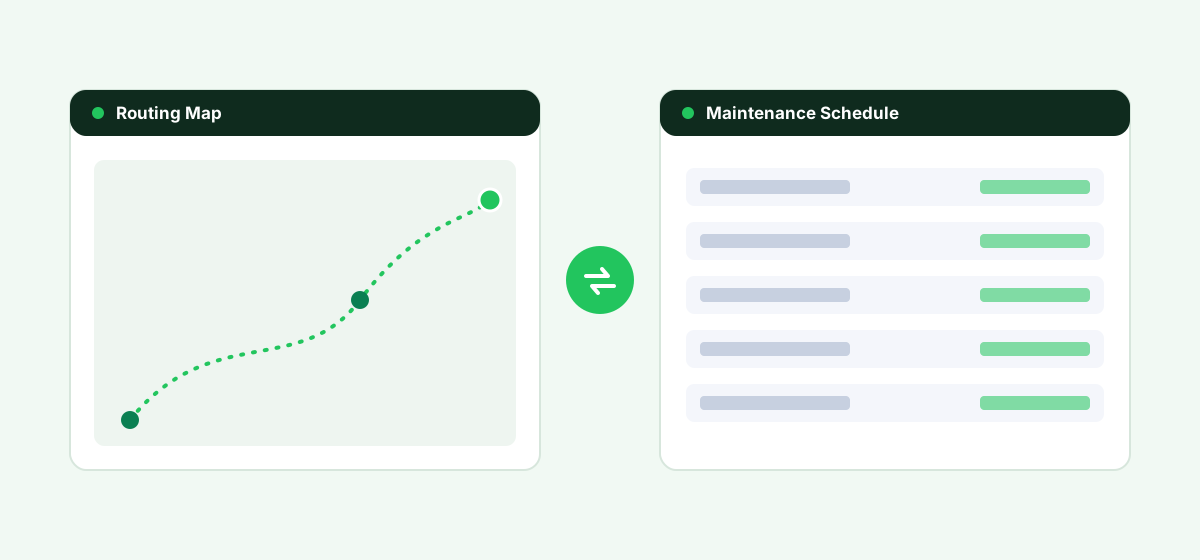
Why Routing and Maintenance Live in Separate Systems
Dedicated student-transportation routing platforms are built around stop optimization, ridership, and compliance with state pupil-transportation routing rules — a specialized problem distinct from vehicle maintenance scheduling. Fleet maintenance software, in turn, is built around preventive maintenance intervals, inspection records, and repair history. Historically, the strongest products in each category focused on their specialty rather than trying to do both, which is why most districts end up running two systems rather than one.
What Gets Lost Without Integration
- No automatic link between route assignment and vehicle downtime. If a bus is pulled for maintenance, staff often manually figure out which routes are affected and reassign vehicles, rather than the systems flagging the conflict automatically.
- Mileage data entered twice, or not reconciled at all. Routing software calculates expected route mileage; maintenance software tracks actual odometer mileage for service intervals. Without integration, these numbers can drift apart unnoticed.
- Harder fleet-wide reporting. Questions combining both — like total fleet cost per mile including maintenance and route efficiency — require manually combining exports from two systems.
Integration Approaches
1. A Vendor-Native Combined Platform
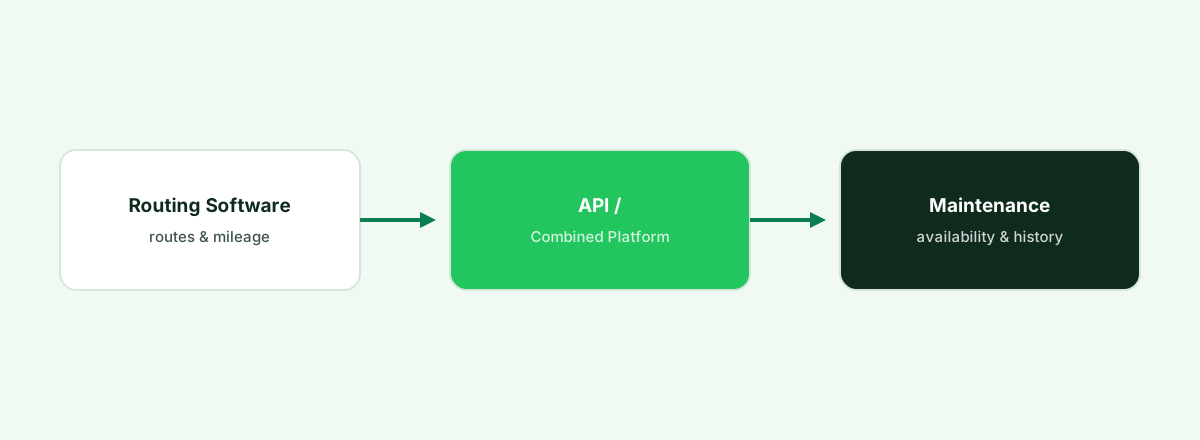
Some transportation software vendors offer both routing and maintenance modules within a single platform, avoiding the integration problem entirely by keeping data in one system. If your district hasn't committed to separate best-of-breed vendors yet, evaluating a combined platform upfront is worth considering.
2. API Integration Between Two Best-of-Breed Systems
For districts that prefer the strongest routing platform and the strongest maintenance platform even from different vendors, some vendors offer API-based data exchange — typically syncing vehicle assignment and mileage one direction and vehicle-availability/downtime status the other. Confirm with both vendors whether a maintained integration between the two specific products already exists before assuming a custom build is required.
3. Manual Reconciliation
Many districts, particularly smaller ones, reconcile mileage and vehicle-availability data manually between the two systems on a regular schedule — workable at small scale, increasingly error-prone as fleet size grows.
Running routing and maintenance separately?
See how Fleet's maintenance platform and API keep vehicle availability and mileage in sync with routing.
Start a Free TrialWhat to Ask Vendors
- Does an integration already exist between your specific routing platform and maintenance platform? Ask both vendors directly rather than assuming compatibility.
- What data actually syncs — mileage only, or full vehicle-availability status that affects route assignment in real time?
- Is a combined platform a better fit than maintaining two best-of-breed systems, given your district's size and administrative capacity?
Frequently asked questions
Why do school districts run separate routing and maintenance software?
Historically, the strongest products in each category specialized in one function rather than both, so many districts ended up with a best-of-breed routing platform and a separate best-of-breed maintenance platform.
Does an out-of-service bus automatically affect route assignments if the systems aren't integrated?
No — without integration, transportation staff typically have to manually identify affected routes and reassign vehicles when a bus is pulled for maintenance.
Are there combined routing-and-maintenance platforms for school districts?
Some vendors offer both functions in a single platform. Whether that's a better fit than separate best-of-breed systems depends on your district's specific routing complexity and maintenance needs.
How do I know if my routing and maintenance vendors already integrate?
Ask both vendors directly whether a maintained integration exists between their specific products — don't assume general "API availability" on both sides means a working integration is already built.
Bottom Line
If your district manages routing and maintenance in two separate systems, ask both vendors directly whether an integration already exists before assuming you need a custom build — and if you're still choosing vendors, weigh a combined platform against best-of-breed separately.
See Fleet connect to routing
Book a demo and see maintenance, availability and mileage sync alongside your routing system.
Start a Free TrialRelated school transportation resources
School bus DVIR & compliance software
eDVIR and audit-ready inspection records.
School bus software for small districts
Right-sized fleet software for 20–50 buses.
Electric school bus management
State-of-charge and charging schedules for EV buses.
Route optimization
Efficient multi-stop route planning.