School Bus Maintenance Software for DVIR and Compliance Documentation
School bus fleets operate under a mix of federal vehicle safety standards, state pupil-transportation regulations, and — for drivers who require a CDL — DOT inspection practices, and requirements vary meaningfully by state. Whatever your state's rules, most districts need reliable, auditable daily inspection records, and paper DVIRs are a common source of lost or incomplete documentation. Here's what to look for in eDVIR-capable software for school bus fleets specifically.
Key takeaways
- Paper loses defects: A driver-reported issue can vanish between the bus lot and the shop.
- eDVIR auto-routes defects: Digital inspections time-stamp records and push defects straight to maintenance.
- State rules vary: Confirm checklists match your state's pupil-transportation requirements, not a generic template.
- Verify before publishing: Have a transportation director or counsel confirm regulatory specifics for your state.
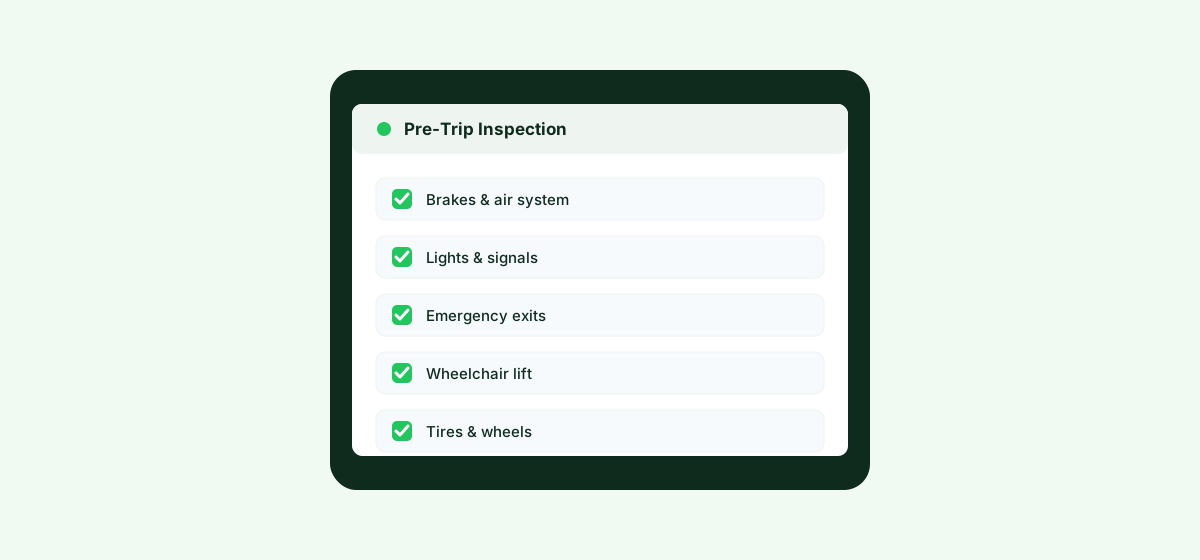
Why Paper DVIRs Are a Compliance Risk for School Districts
A paper-based pre-trip and post-trip inspection process depends on drivers consistently completing and turning in physical forms, and on someone in the transportation office reliably filing and retrieving them if a defect report or audit requires it later. Electronic DVIR (eDVIR) software addresses this by having drivers complete inspections on a phone or tablet, time-stamping and storing the record automatically, and — critically — routing any reported defect directly to the maintenance team rather than relying on a driver handing over a paper slip.
What to Look For in School Bus DVIR/Compliance Software
- Mobile-first driver inspection workflow, simple enough for drivers to complete reliably every trip without becoming a compliance burden itself.
- Automatic defect routing to maintenance, so a reported issue (brakes, lights, wheelchair lift, emergency exits) triggers a maintenance workflow immediately rather than sitting in a paper stack.
- State-specific inspection checklist support. Pupil transportation inspection requirements vary by state — confirm the software can be configured to your state's required inspection items, not just a generic commercial-vehicle DVIR template.
- Out-of-service tracking, clearly flagging a bus as not cleared for the road until a reported defect is resolved and documented.
- Audit-ready recordkeeping, with easily retrievable inspection history by vehicle and date range for state inspections or audits.
- CDL/driver qualification tracking, if your district's drivers require a CDL, alongside inspection records — many districts prefer this in the same system.
- Integration with existing maintenance scheduling, so inspection-reported defects and routine preventive maintenance live in one system rather than two disconnected processes.
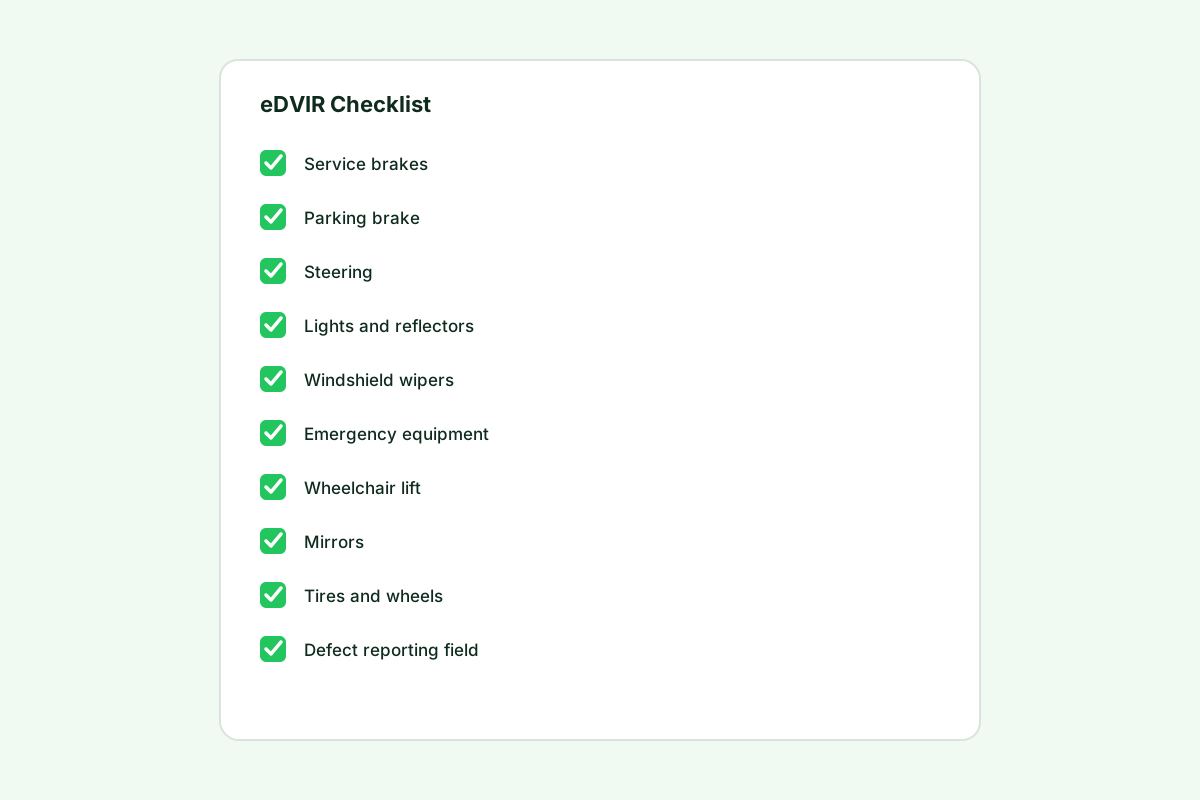
Still running paper pre-trip inspections?
See how Fleet's eDVIR time-stamps every inspection and routes defects straight to maintenance.
Start a Free TrialFederal, State, and District-Level Requirements: Know the Layers
School bus compliance isn't governed by a single uniform federal rule — it involves a mix of federal vehicle safety standards (which govern how school buses are built), state-level pupil transportation regulations (which often set specific inspection and driver requirements), and in some cases FMCSA-aligned practices for CDL-holding drivers. Because requirements vary by state, confirm with your state's pupil transportation office exactly what your inspection and recordkeeping obligations are before assuming a generic commercial DVIR template covers them — then choose software configurable enough to match.
Note: Regulatory details vary by state and change over time. Have your district transportation director or compliance counsel confirm your specific federal/state obligations before finalizing a process.
Frequently asked questions
Are school buses required to follow FMCSA DVIR rules?
It depends on the specific vehicle, driver CDL status, and state — school bus compliance is governed by a mix of federal vehicle safety standards and state pupil-transportation rules, which vary by state. Check with your state's pupil transportation authority for your specific requirements.
What is an eDVIR, and how is it different from a paper DVIR?
An electronic DVIR (eDVIR) is a digital version of the driver vehicle inspection report, completed on a phone or tablet instead of paper, with automatic time-stamping, storage, and — in most platforms — automatic routing of reported defects to the maintenance team.
Can eDVIR software be configured for state-specific school bus inspection requirements?
Many platforms support configurable inspection checklists, but confirm specifically that a vendor can match your state's pupil transportation inspection requirements rather than assuming a generic commercial-vehicle template is sufficient.
Does eDVIR software replace a district's maintenance scheduling system?
Not necessarily — some platforms combine inspection/defect reporting with preventive maintenance scheduling in one system, while others handle inspections only and need to integrate with a separate maintenance platform.
Bottom Line
For school bus fleets, the value of eDVIR software isn't just going paperless — it's making sure a driver-reported defect can't quietly get lost between the bus lot and the maintenance shop. Confirm state-specific configurability before choosing a platform, since pupil transportation requirements aren't uniform nationwide.
See Fleet's eDVIR & compliance
Book a demo and see mobile inspections, defect routing and audit-ready records for your bus fleet.
Start a Free TrialRelated school transportation resources
School bus software for small districts
Right-sized fleet software for 20–50 buses.
Routing + maintenance integration
Connect routing and maintenance systems.
Electric school bus management
State-of-charge and charging schedules for EV buses.
Vehicle inspections & DVIR
Digital inspection workflows for any fleet.